Set a budget of $100 for a first phone and you won't lack for options: a rack of cheap smartphones, a few “kids” devices, some prepaid deals. But the best first phone under $100 isn't simply the cheapest one that technically works. It's the one that solves the problem you actually have — without quietly creating three new ones.
Before you sort by price, it's worth understanding what that budget really buys, and where the true cost of a first phone tends to hide.
The cheap smartphone trap
A $99 smartphone looks like a bargain until you add up everything it drags along behind it. The sticker price is the smallest number in the equation:
- The monthly plan. A cheap phone still needs cellular service, and that bill arrives every month, often dwarfing the cost of the device within a year.
- The internet. A budget smartphone is still a smartphone — browser, app store, social media, and a feed included. For a child, that's the most expensive part, and it isn't measured in dollars.
- The management. Filters, parental controls, and screen-time settings to configure, maintain, and defend as your kid gets savvier.
With a first phone, the price on the box is rarely the number that matters. What the phone lets in costs far more than what it costs.
In other words, a cheap smartphone isn't actually cheap. It's an inexpensive door into something very expensive to manage.
What “value” really means for a first phone
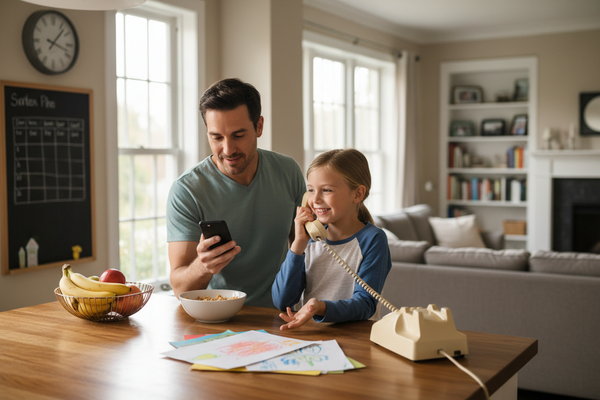
The right way to judge a first phone on a budget isn't “how much phone do I get for the money?” It's “does this solve the need without introducing new problems?” For most families, the need is modest and clear: let my child call family and friends, and be reachable at home. A phone that nails exactly that — and nothing else — is delivering real value, no matter how simple it looks.
By that measure, more features can actually mean less value, because each one is another thing to pay for, manage, or worry about.
What under $100 should buy you
Here's what a genuinely good first phone in this budget should deliver:
- Simplicity a child (or grandparent) can use with zero instruction.
- Safety by design — no open internet, no strangers, no feed.
- Approved contacts you control, so you're not policing a device every night.
- Real emergency calling, so 911 always works.
- No surprise costs — a clear, low price with no cellular contract to sign.
The $99 home phone option
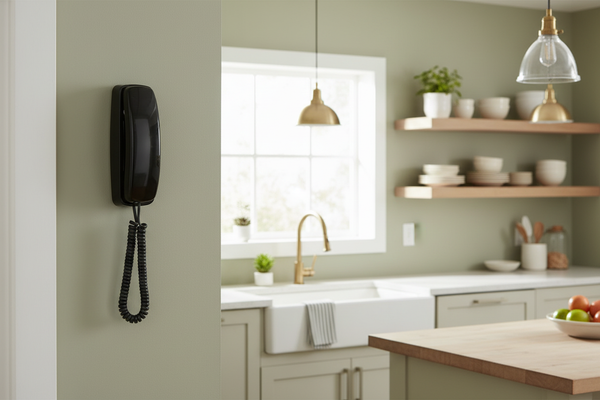
One option that fits this budget almost perfectly is a modern home phone. The Tribe Phone costs $99 for the phone and its WiFi Connector, then $9.95 a month for service — no cellular plan, no contract, cancel anytime. And it's honest value, because there's no hidden second half:
- It runs on the WiFi you already have, so there's no cell plan to buy.
- It has no internet, no apps, and no feed — so there's nothing to filter or manage.
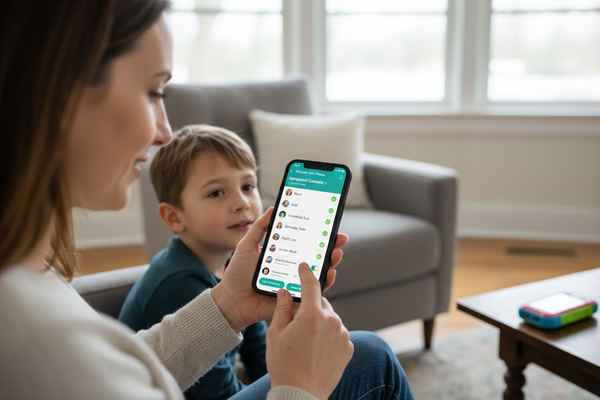
- Your child calls only the contacts you approve, and everyone else is automatically blocked.
- 911 always goes through and alerts you, with your home location shared with responders.
- You set it up in about five minutes and manage everything from an app on your own phone.
A quick word on that monthly fee, because being upfront is the point: yes, there's a $9.95 service charge, and it's fair to count it. But it's a fraction of a typical kids' cellular plan, there's no contract, and it buys a phone that can't run up data charges, in-app purchases, or the kind of exposure that has no price tag at all.
The bottom line
If your goal is the cheapest device that runs apps, a budget smartphone will do it — and then hand you the bill, and the battles, for years. If your goal is the best first phone for under $100 — one that connects your child to the people who matter and stops there — a simple, screen-free home phone is hard to beat on value. Sometimes the smartest money is spent on everything a phone leaves out.
Want the bigger picture on a screen-free first phone? Read A landline phone for kids and The best kind of kids phone has no internet at all.