Ask a parent what worries them about giving a child a phone and the answer is rarely “the phone.” It's the people who can reach through it — strangers, scammers, a stream of unknown numbers, and the pressure of a wider world before a kid is ready for it. Most “kid-safe” phones try to manage that worry with a dozen settings. Approved contacts replaces all of them with a single question: who do you trust?
The problem with call blocking after the fact
A traditional phone — landline or cell — starts from the assumption that anyone can call, and asks you to block the bad ones afterward. That's a losing game. Spam numbers change, scammers are relentless, and a child can't be expected to screen a ringing phone and judge who's safe to answer.
Blocking one bad number at a time is like bailing a boat. The better approach is to close the hull entirely: instead of blocking the people who shouldn't get through, only let through the people who should.
Don't teach a kid to screen strangers. Build a phone strangers can't reach in the first place.
What approved contacts does
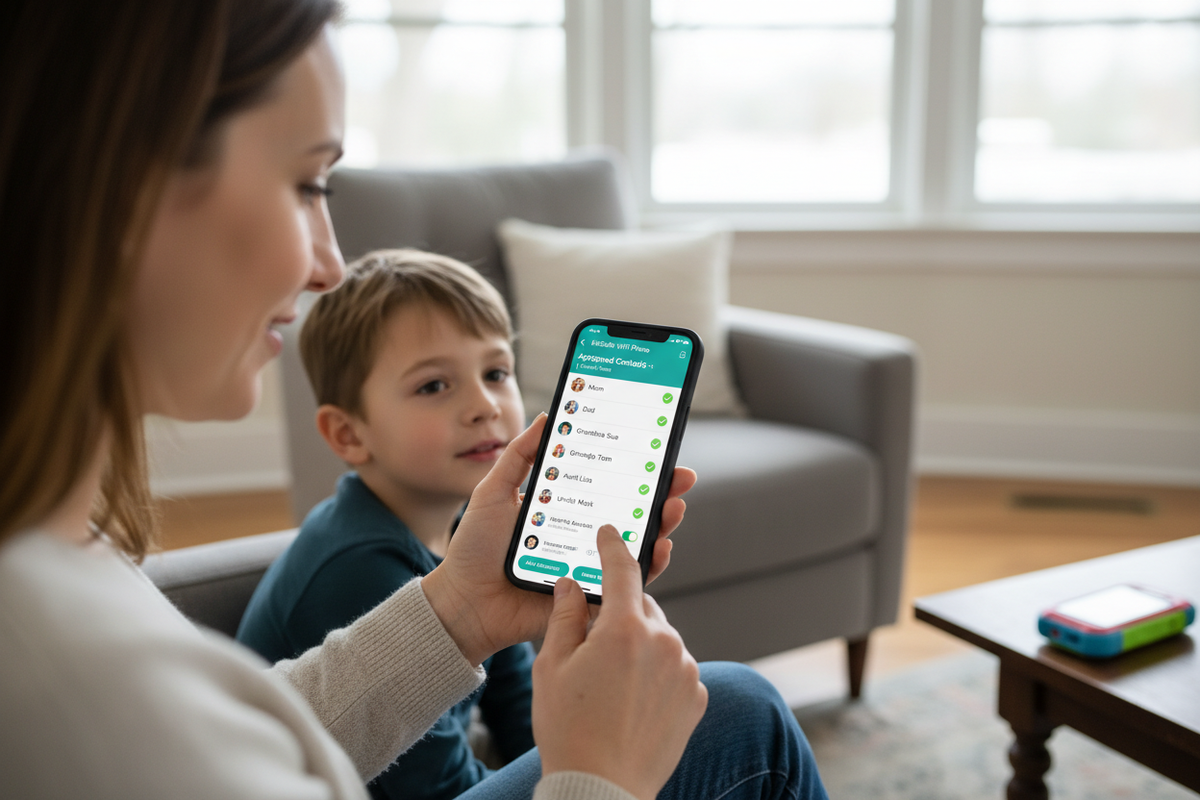
Approved contacts restricts calls to and from only the people you approve — in both directions. Your child can call the contacts on your list, and only those contacts can call in. Everyone else is automatically blocked. On the Tribe Phone, you build and manage that list from an app or web portal on your own phone, so you decide exactly who is part of your child's world and can change it anytime.
That single design choice quietly closes off a whole category of risk:
- No scam or spam calls, because unknown numbers can't ring through at all.
- No strangers, because there's no way for someone you haven't approved to make contact.
- No screening for your child, because every call that comes in is already someone you trust.
The one exception, by design
There's a single, deliberate exception to the approved list: emergencies. Calls to 911 always go through no matter what, so locking the phone down to trusted contacts never stands between your child and help when it's truly needed.
Why this is the whole safety model
The reason approved contacts matters so much is that it turns child phone safety from an ongoing chore into a one-time decision. There's no feed to monitor, no filter to keep current, no nightly settings check — because the risky parts were never let in. You answer “who can reach my child” once, adjust it as your family grows, and that's the conversation.
That's the thinking behind the Tribe Phone: a WiFi home phone made for kids and managed by you, where approved contacts sits at the center of everything. Combined with no internet, no apps, and no feed — the reason many parents call it the best phone for kids with no internet — it means the device can only ever do one thing: connect your child to the people you trust. A kids phone with no internet and an approved-only contact list is safety you set once and don't have to defend every day, which is the only kind that reliably holds.
For the broader take, read What makes a phone actually safe for kids? and The best kind of kids phone has no internet at all, or see how it works in What is a WiFi home phone?