If you've been looking for a WiFi phone for home, you've probably run into a confusing mix of business desk phones, technical “VoIP” jargon, and old landline gear. Underneath the confusion is a genuinely simple idea: a home phone that makes its calls over your internet connection instead of a copper phone line or a cell plan.
Here's a plain-English guide to what a WiFi home phone is, how it works, and who it's a good fit for.
What a WiFi home phone actually is
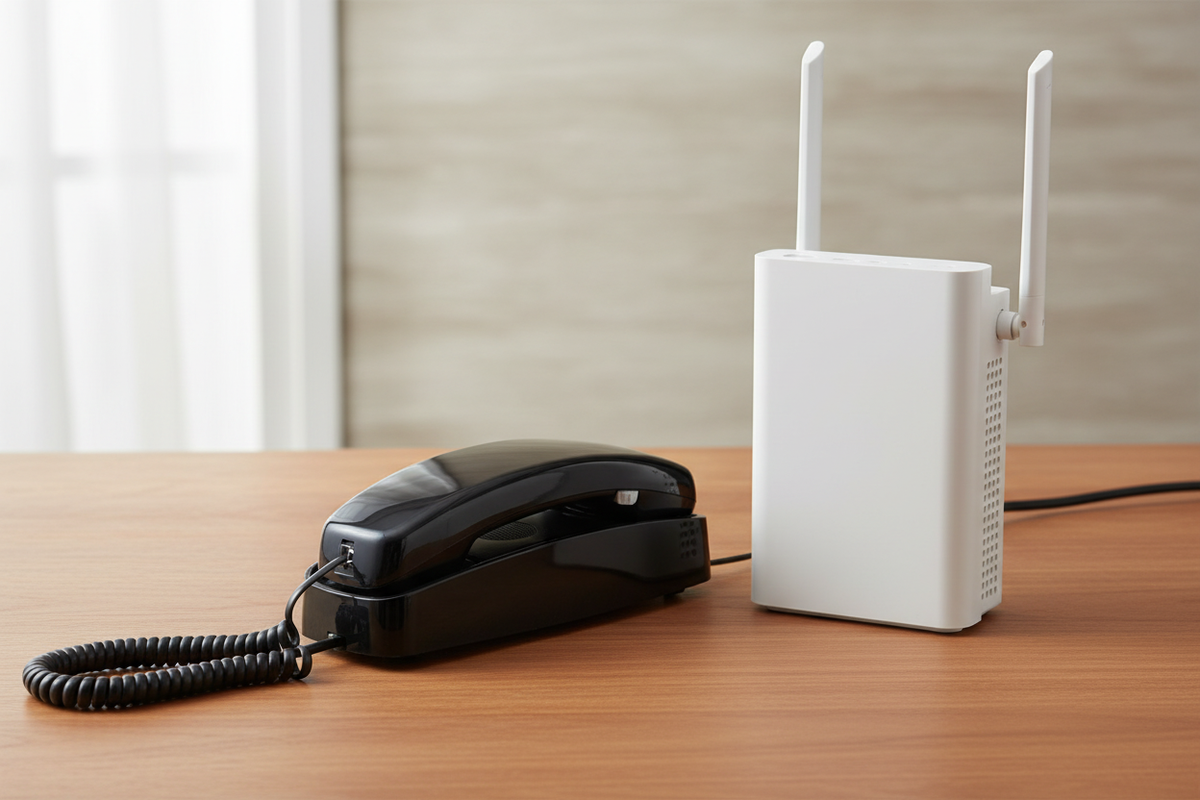
A WiFi home phone is a phone that lives in your house and connects to your home WiFi network, the same one your other devices use. When you make a call, your voice travels over your internet connection rather than through a traditional landline wire or a cellular tower.
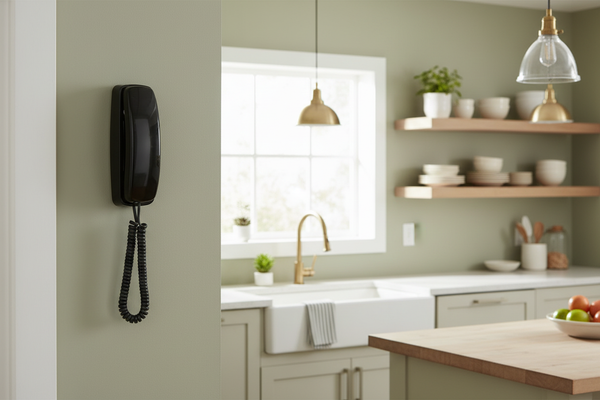
The practical upshot: you get a real home phone — one that stays in a fixed, familiar place and is always ready to use — without needing a landline account from the phone company or a mobile plan with a SIM card. Setup is usually as simple as plugging a small connector into a power outlet and joining your WiFi.
One important distinction: runs on the internet, isn't the internet
This trips people up, so it's worth being clear. A WiFi home phone uses your internet connection to place calls — but that doesn't mean it browses the web. The best home phones are built to do one thing: make and receive calls. There's no browser, no apps, and no feed on the device itself.
It calls over your WiFi. It doesn't put the internet in your hand.
That's a meaningful difference if you're searching for a “home phone without internet” because you want the safety of a device that can't wander onto the open web. A WiFi home phone can give you exactly that: the convenience of calling over your home network, with none of the distraction or risk of an internet-connected screen.
Why families are choosing WiFi home phones
A few shifts have made the WiFi home phone the natural modern choice:
- Landlines are being retired. Traditional copper phone service is being phased out, so families who still want a home phone need a new way to power it.
- Nearly everyone already has WiFi. If you have home internet, you already have what a WiFi home phone needs — no new line to install. Most work with any standard router, including options like Starlink and cellular home internet.
- No cell plan required. There's no SIM card, no carrier contract, and no monthly mobile bill to manage.
- It keeps the home phone alive. You get the fixed-location, always-ready, simple-to-use experience of a landline, updated for how homes actually connect today.
What to look for in a WiFi phone for home
Not all WiFi home phones are aimed at the same person. Many are business desk phones loaded with features most households will never use. If you want one for your family, look for:
- Simple setup over your existing WiFi, with no technical configuration.
- Calling only — no browser or apps to complicate or compromise it.
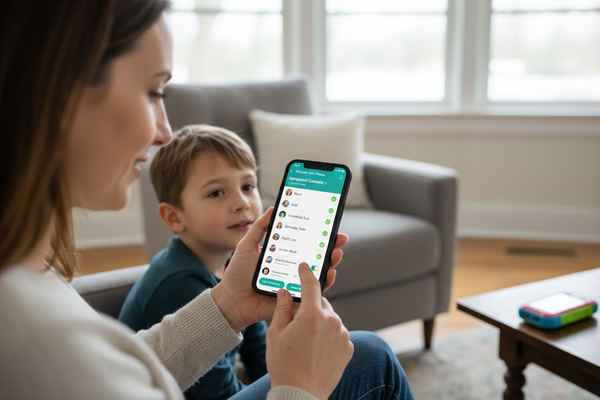
- Control over contacts, so you decide who can call and be called, keeping scam and spam calls out.
- Reliable emergency calling, so 911 always connects and the family is alerted.
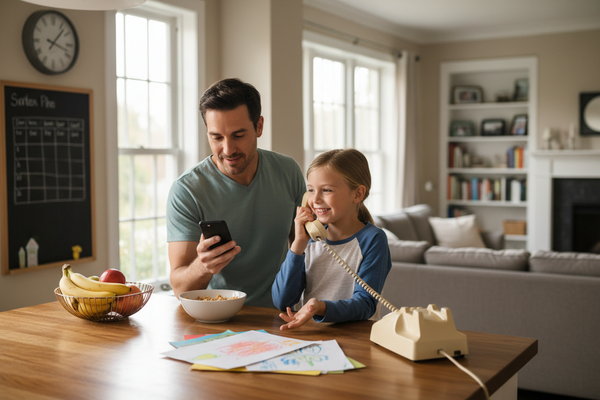
- An easy, familiar design that anyone in the house — a child or a grandparent — can use without a manual.
Where TribeConnect fits
TribeConnect is a WiFi home phone built for families rather than offices. It sets up on your home WiFi in about five minutes with no landline and no cell plan, and it does exactly one thing on purpose: connect the people you approve. There's no internet to browse, no apps, and no feed — and because you manage the contact list from an app or web portal, everyone you haven't approved is automatically blocked, so scam and spam calls never get through. Emergency calls to 911 always go through and alert you, and if the power or internet drops, calls forward to your cell. It's $99 plus $9.95 a month, with no contract.
A WiFi home phone isn't complicated once you cut through the jargon. It's just the home phone, reinvented for a world that runs on WiFi instead of copper wire — simple, dependable, and always right where you left it.
Curious how this works as a first phone for kids or a simpler phone for an older parent? See A landline phone for kids and Landline phones for seniors.