“Should we get a landline or just use cell phones?” It's one of the most common questions families ask about how they stay in touch — and it's almost always framed as an either/or for the whole household. It isn't. The better way to answer it is person by person, and need by need.
Once you break it down that way, the landline-or-cell question stops being a standoff and turns into a simple matter of matching the right tool to the right job.
What a cell phone is genuinely good at
Let's give the cell phone its due. For an adult who's out in the world all day, a mobile phone is the right tool: it goes where you go, it's one device per person, and it keeps you reachable on the move. If the need is “reach me anywhere,” nothing beats a phone in your pocket.
The trouble starts when we assume that because a cell phone is right for a commuting adult, it must be right for everyone in the house — including a nine-year-old, or an eighty-year-old whose day is mostly spent at home. For them, a pocket smartphone is often more device, more distraction, and more risk than the situation actually calls for.
What a home phone is genuinely good at
A home phone answers a different need, and answers it better than a cell ever could:
- It's shared. One phone for the household, in a common room, that anyone can use and answer.
- It stays put. Always in the same place, never lost, never left in another room or dead in a pocket.
- It's simple. No unlocking, no apps, no account — pick it up and call. That matters enormously for kids and older adults.
- It's focused. A home phone makes calls. It doesn't carry the internet, the feed, or the endless distraction into your home.
A cell phone is for a person on the move. A home phone is for a household staying connected. Plenty of families actually want both.
“But isn't the landline dead?”
This is where the old debate gets stuck. People hear “landline” and picture a dying technology — copper wires, a jack in the wall, a bill from the phone company. And it's true that traditional copper landline service is being retired across the country.
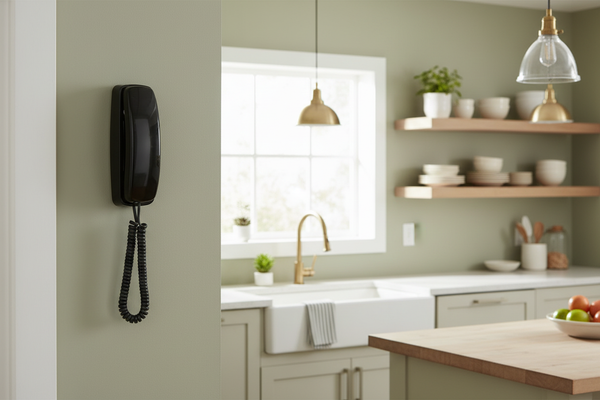
But the home phone and the copper wire are two different things. What's going away is the old wire. The idea of a dependable phone that lives in your home is very much alive — it just runs on WiFi now instead of a phone line. So “landline or cell” isn't really a choice between old and new. It's a choice between a phone that stays home and a phone that travels.
Who a home phone is right for
A home phone earns its place when the need is connection at home rather than reachability on the go. It's a particularly good fit for:
- Kids who aren't ready for a smartphone but want to call friends and family, and need to reach a parent after school.
- Older adults who want a simple, familiar phone that's always in the same spot and safe to answer.
- Any household that wants a shared, scam-free number the whole family can use — without handing anyone a private screen.
The modern answer is usually “both”
For most families, the real solution isn't landline or cell — it's the right mix. The adults who are out and about keep their cell phones. And the household adds a modern home phone as its anchor: a shared, always-there line that's perfect for the kids and grandparents who don't need a smartphone, and handy for everyone else.
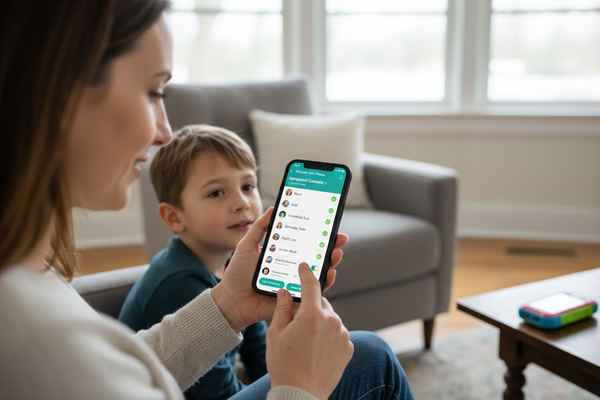
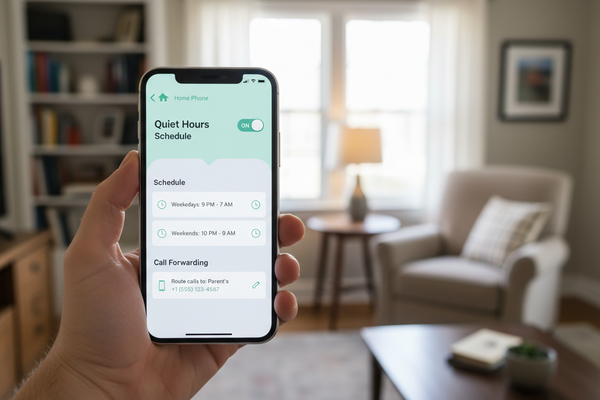
That's the role TribeConnect is built to play. It's a WiFi home phone made for families and managed by you: it sets up on your home WiFi in about five minutes with no landline and no cell plan, calls only the contacts you approve — everyone else is automatically blocked — and keeps the internet, apps, and feed out of your home entirely. Emergency calls to 911 always go through and alert you, you manage everything from an app, and it's $99 plus $9.95 a month with no contract. It gives your household the home phone half of the equation, so your cell phones can just be cell phones.
So: landline or cell? Ask it one person at a time. For the adult on the move, keep the cell. For the kids, the grandparents, and the shared family line, a modern home phone is the simpler, safer answer — and the two work better together than either does alone.
Curious how the modern home phone actually works? Read What is a WiFi home phone? — or, for the kids in the house, A landline phone for kids.