Search for a safe phone for kids and you'll mostly find smartphones with a list of parental controls bolted on: app blockers, web filters, screen-time schedules, location tracking. The pitch is that with enough settings, a device built for adults can be made safe for a child.
It's worth questioning that premise. A phone that needs a dozen controls to be safe is telling you something about what it is underneath. Real safety usually comes not from what you block, but from what was never there in the first place.
Two very different definitions of “safe”
When companies say a phone is “kid-safe,” they usually mean one of two things — and they're not the same:
- Safe-by-restriction: a full smartphone with the risky parts fenced off by settings you have to configure, maintain, and defend.
- Safe-by-design: a device that simply doesn't have the risky parts — no browser, no app store, no feed — so there's nothing to fence off.
Restriction can work, but it's fragile. Settings get changed, updates reset preferences, and kids are remarkably good at finding the gap. Safe-by-design doesn't depend on you winning that game, because the game isn't running.
The safest phone isn't the one with the most parental controls. It's the one that doesn't need them.
What actually makes a kids' phone risky
It helps to be specific about what parents are really worried about. The risks almost always trace back to the same few sources:
- The open internet — content no child should stumble into, one search away.
- Social media and feeds — designed to hold attention and invite comparison.
- Strangers with a way in — messaging apps and games where anyone can make contact.
- The always-on nature — a device that follows a kid to bed, to the table, everywhere.
Look closely and you'll notice: none of these come from the phone calls. They all come from the internet-connected extras. Strip those away and most of the danger goes with them.
Five things to check before you buy
Use this as a quick filter when you're comparing “kid-safe” phones:
1. Can it reach the open internet — at all?
If there's a browser or app store anywhere on the device, “safe” depends on your settings holding. A phone with no internet capability removes the single biggest risk by default.
2. Who controls the contact list?
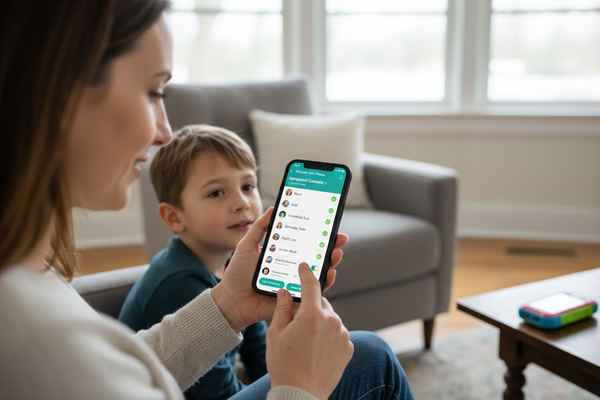
The strongest safety model is simple: your child can reach the people you approve, and no one else can reach them. If a stranger can't get through, a whole category of danger disappears.
3. Is there a feed?
No feed means nothing engineered to keep your child scrolling, comparing, or staying up late. It's one of the clearest lines between a tool and a trap.
4. What happens in a real emergency?
A genuinely safe phone still reaches help. Look for one where 911 always connects — even outside the approved-contact list — and where you're notified the instant it's used.
5. Does staying safe require constant effort from you?
If keeping the phone safe means nightly check-ins and settings audits, that's a fragile kind of safe. The better version holds up on its own.
Safe-by-design, in practice
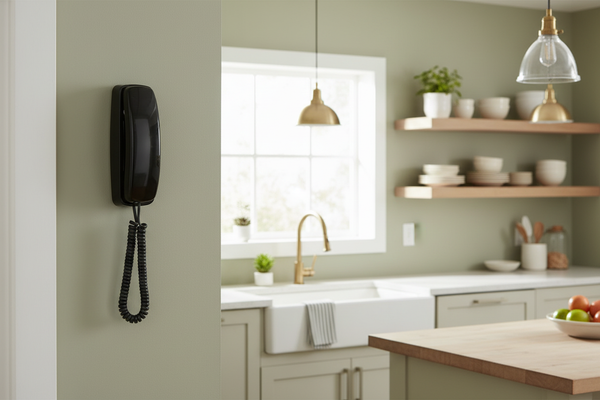
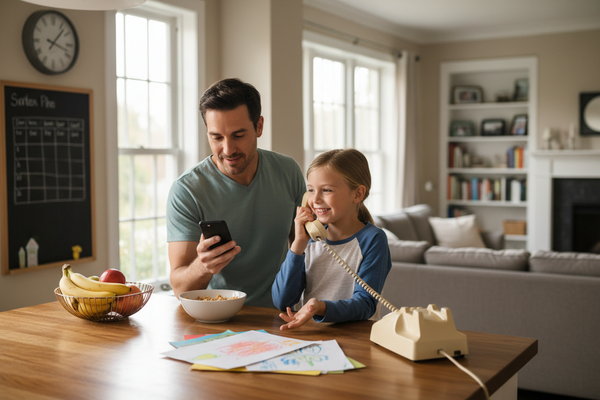
This is the thinking behind the Tribe Phone: a WiFi home phone made for families and managed by you. It has no internet, no apps, and no feed, so there's nothing to filter or lock down. Your child can call the contacts you approve, and everyone else is automatically blocked — so scam and spam calls never get through. If there's ever an emergency, 911 always connects regardless of the contact list, and you and your emergency contacts are alerted with your home location. Because it's a home phone rather than a pocket device, it doesn't come to the dinner table or disappear into a bedroom at night — and you manage all of it from an app on your own phone.
You don't have to accept the idea that a safe kids' phone is just a smartphone with more rules. The simplest device that meets the need is almost always the safest one — because safety you don't have to maintain is the only kind that reliably lasts.
Not sure your child needs any phone yet? Start with Should a 12-year-old have a phone?