Here's a small thing that trips up almost every first phone: dialing. We forget that scrolling a contact list, finding the right name, and tapping the right sequence is a genuine skill — one a four- or five-year-old hasn't built yet, and one any kid can fumble in the exact moment they most need to reach you.
That's the problem one-touch calling quietly solves. Instead of asking a child to navigate to a person, it puts the person one button away.
Why dialing is a bigger barrier than we think
Adults dial without thinking, so it's easy to forget how much is actually involved. For a young child, reaching a parent on a typical phone can mean waking a screen, finding the phone app, opening contacts, recognizing the right name among many, and tapping call — a chain of steps, each one a place to get stuck. When a kid is upset, rushed, or just little, that chain is exactly where things fall apart.
A first phone should remove that chain, not test a child on it. The measure of a good one isn't how much it can do — it's how little a child has to do to reach the people who matter.
A phone your kid can't work in a hurry isn't a safety net. It's a puzzle with your voice at the end of it.
What one-touch calling actually does
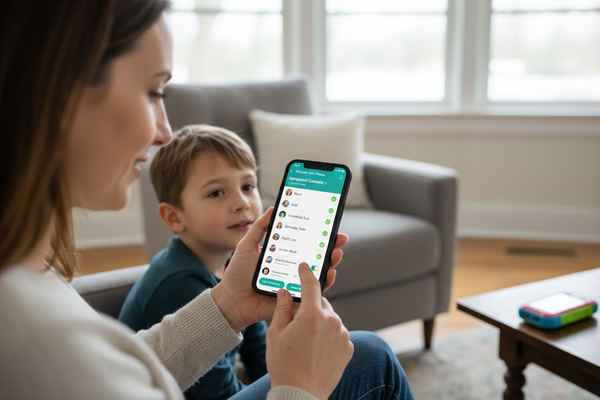
One-touch calling assigns your most important contacts to their own speed-dial button, so calling Mom, Dad, or Grandma is a single press — no scrolling, no searching, no reading required. You decide who earns a button, and your child simply pushes it. On the Tribe Phone, you assign speed-dial numbers to your contacts so kids can call your whole “Tribe” with the press of a button.
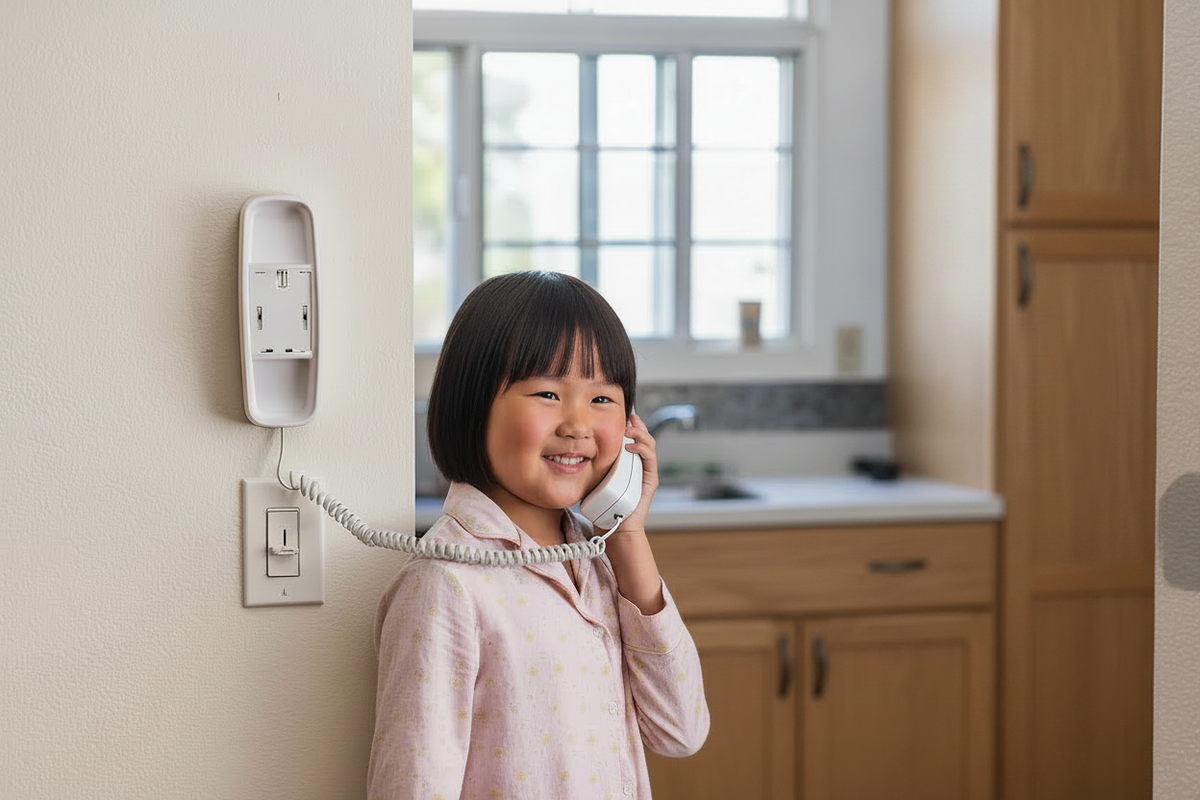
It sounds almost too simple to matter. It's the opposite: the simplicity is the feature. A four-year-old who can't yet read a name can absolutely learn “the blue button calls Mommy.”
Simplicity only a screen-free phone can offer
One-touch calling works precisely because nothing else is competing for the button. On a smartphone, a speed-dial shortcut sits crowded next to a hundred other icons. On a kids phone with no internet, calling is the entire purpose of the device, so a single, clearly marked button is all there is — nothing to aim carefully at, nothing to mis-tap, and no app to open first. Calling becomes a reflex instead of a task.
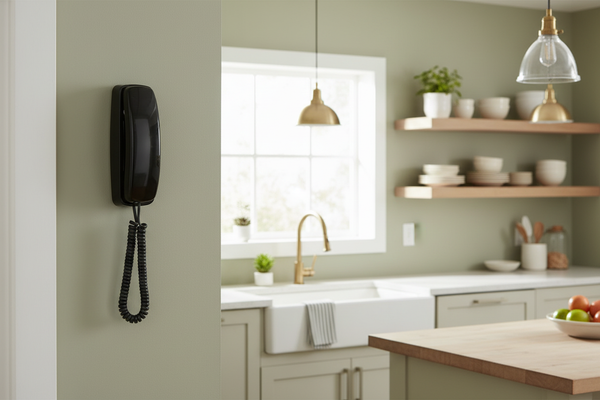
It helps that the device is a WiFi phone that lives in one place at home rather than a screen juggling messages, games, and notifications. With no internet and no feed to wade through, the one thing a child sees is the one thing they need: the button that calls someone they love.
Who it helps most
- Young kids who can not yet read a contact list but can absolutely learn a button.
- Any child in a stressful moment, when fine motor skills and patience go out the window.
- Families who want calling to be instinctive, so a phone is genuinely useful the day it arrives — not after a training session.
Where it fits on the Tribe Phone
The Tribe Phone is a WiFi home phone made for kids and managed by you, and one-touch calling is a big part of what makes it usable for children as young as four. You set up the speed-dial buttons from an app on your own phone; your child just presses one and starts talking. There's no screen to browse, no apps, and no dialing to learn — only the people you've approved, one button away.
The best first phone isn't the one with the most features. It's the one a kid can use without any help at all — and calling that starts and ends with a single button is about as close to that ideal as a phone gets.
Want the bigger picture on a screen-free first phone? Read The best kind of kids phone has no internet at all and What is a WiFi home phone?